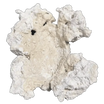


Clam Holder
Clam Holder
ChandlerRocks Clam Holders are specially designed rock structures that provide a secure and stable base for clams in saltwater aquariums. These holders feature natural-looking rock formations with built-in depressions or grooves that cradle the clam, preventing it from tipping over or becoming unstable in the sand bed.
Made from porous MarcoRocks®, ChandlerRocks Clam Holders seamlessly blend into reef aquascapes while promoting the growth of beneficial bacteria. They are ideal for keeping clams securely in place on the sand or rockwork, ensuring proper exposure to light and water flow without the risk of them falling or shifting.
Specifications (L x W x H are approximate):
- Length: 5″ to 6″
- Width: 4″ to 5″
- Height: 2″ to 3″
- Material: Natural MarcoRocks®
- Placement: Suitable for sand bed or rockwork
Key Features:
- Integrated grooves to cradle clams securely
- Available in Natural or Coralline
- Blends naturally into reef environments
- Supports beneficial bacteria growth
- Reef-safe and free of pests or chemicals
Why Choose Our Clam Holders?
- Stable Support: Keeps clams upright and secure on sand or rockwork
- Natural Look: Mimics real reef rock to blend seamlessly into aquascapes
- Light & Flow Optimization: Ensures proper positioning for light exposure and water circulation
- Porous Surface: Enhances biological filtration through beneficial bacteria growth
- Safe & Durable: Made from reef-safe MarcoRocks® for long-term use
Keep your clams stable, secure, and thriving with ChandlerRocks Clam Holders, crafted to combine form, function, and long-term reef compatibility.
Product Disclaimer:
Clam not included. Please note that all our products are custom-made, and the product images shown are examples of what you will receive. Due to the unique nature of each item, slight variations in color, shape, or size may occur.
In the event that your package or product is damaged during shipping, please notify us immediately. Be sure to include clear photos of the shipping box and the product damage so we can assist you with a resolution as quickly as possible.
Do I need to cure or soak it?
Do I need to cure or soak it?
No. This is dry MarcoRocks, and MarcoRocks state their rock is reef safe straight out of the box. A light rinse under running water to knock off shipping dust is all it needs, and even that is optional.
Curing is a step that applies to two other things, not to this. Wild live rock has to be cured because organisms that died in transit need to break down first. Cement-based artificial rock has to be cured because it can leach into your water until it neutralizes. Ours is neither: it is natural calcium carbonate with no chemicals or additives.
Cycling is a different thing and it does still apply. Cycling is establishing the bacteria that process fish waste, and every new tank goes through it whatever rock you use. Adding a piece to a tank that is already established will not restart it.
New to any of these words? Read the glossary.
Shipping & Turnaround
Shipping & Turnaround
Ready-made pieces ship in 12 to 14 business days, nationwide to your door, and tracking is emailed to you when your order leaves the studio.
Custom builds do not have a fixed turnaround. It depends on the size of the piece and what is already in the queue, so we give you a real timeline once the design is settled rather than a guess up front.
Large handcrafted scapes have real height and joints and can be fragile in transit, so depending on where you are we can hand-deliver to a nearby reef show, arrange local pickup in Pennsylvania, or offer on-site delivery and setup. We confirm the best option with you before you pay.


In plain English
Clams such as maxima and crocea anchor themselves to hard rock using threads from a gland in their foot. On a bare sand bed they have nothing to grip, so they sit loose and can be tipped over by flow, snails or fish.
That matters more than it sounds. If a clam has anchored and then gets knocked over, those threads tear, and that is often fatal for an expensive animal.
This gives it a solid, cupped seat to grip and sit level in. It also means you can lift the clam and its base together, which is the one way every reputable source recommends relocating a clam.